Grass is a plant that has a great influence in our life as the call from nature and a decorating item in our daily lives. The grass we have always been happy to see in our gardens aswell as in parks and gardens has now begun to take its place in all areas of our lives in our gardens and terraces, cafes and restaurants.
As the city life has surrounded us with concrete buildings, the grass has become more important in our close surrounding. However, due to its simple use and maintenance people have come to prefer synthetic turf rather than natural turf. As a both cost and time efficient product, artificial grass is used in sports fields as well as in use for landscape and decoration.
Types of Artificial Turf
Artificial Turf types can be classified in three categories based on their areas of use: Professional artificial turfs, outdoor artificial turfs and indoor artificial turfs.
Professional Artificial Grass Artificial turfs: Artificial turfs are widely used in football pitches for competitions and training purposes.
• Outdoor Artificial turf
• Indoor Artificial turf
Deciding on which artificial turf is more appropriate is an easy decision to be made based on the climatic conditions and ground structure of the area where the carpet area will be installed.
Outdoor Artificial Turf
Outdoor artificial turf is a system surrounded by wire mesh, the ceiling is covered with mesh, and artificial turf is used on the ground. The size of artificial turf can vary according to the client’s request.
Indoor Artificial Turf
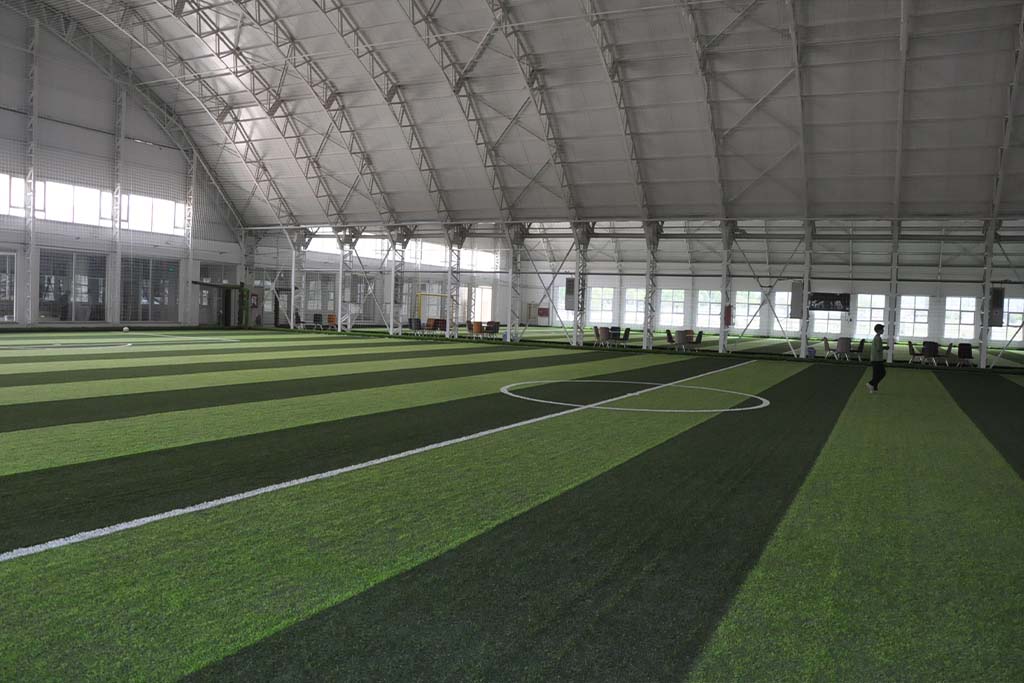
Indoor carpet courts are generally preferred when heavy winter conditions or professional sports competitions are on the agenda. Users can select the upper part of the grass from several different options especially in windy areas as well as areas with heavy snowfall.
Tarpaulin Covered Indoor Artificial Turf
The tarpaulin covered artificial turf is a long-lasting type of artificial turn which is designed not to be affected by weather conditions. Since the coating of the tarpaulin is water and moisture proof, it offers a chance to play in any weather.
Sandwich Panel Indoor Artificial Turf
Sandwich panel indoor artificial turf is also water and moisture proof as the tarpaulin covered turf. Thanks to its feature which is designed not to produce or host bacteria, it is also hygienic. Sandwich panel also provides high heat and sound insulation in areas where indoor artificial turf is applied. Moreover, the material is not affected by acid, acid vapor and chemical gas etc.
Sheet Metal Coating Indoor Artificial Turf
Sheet metal coating indoor artificial turf is a long-lasting material and is designed not to be affected by bad weather conditions. The technology which is designed to prevent the formation of bacteria creates a hygienic product. Most importantly it allows to play in any weather thanks to its water and moisture-proof feature, enabling a high quality of heat and sound insulation in the field.