
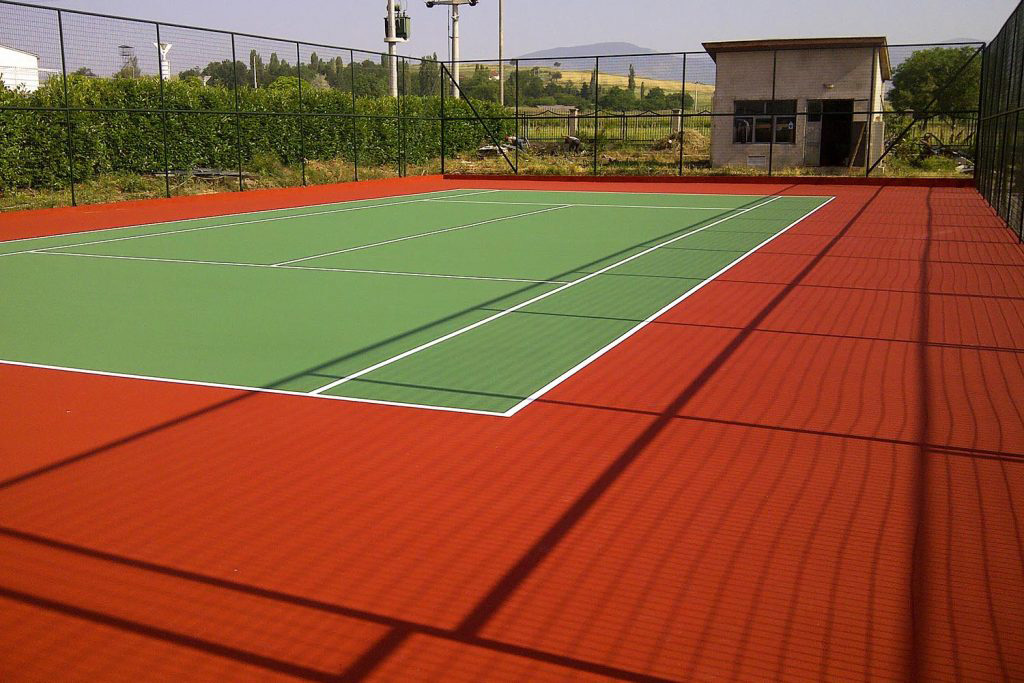
Tennis is a very enjoyable sport which gains popularity every now and then. You can play tennis in multi-purpose fields. While constructing the court, the ground must be examined, and infrastructure must be prepared first and then you can initiate the process to construct your tennis court.
Tennis Court Ground Selection
The ground on which the tennis court will be built should be examined first and ensured that the ground is sound. Cleaning the ground by work machines and compressing the soil by a roller is important before beginning the excavation process. As a final stage of the infrastructure, drainage pipes are laid.
After this stage, ground selection which is divided into two can begin: natural floors and synthetic floors.
For synthetic floors, one can prefer acrylic floor with a flexible structure or tartan ground. If a natural tennis court floor is desired, natural grass tennis court or clay tennis court which is made with special sand can be preferred. Natural grass is not preferred much due to its maintenance requirements. However, the world-famous tennis tournaments are mostly played in natural grass tennis courts.
Artificial Grass Tennis Court Construction
Artificial grass is a type of court that is frequently preferred in tennis courts. A synthetic tennis court can be obtained by laying synthetic grass, installing illumination and lighting system to every corner of the facility. Artificial grass models recommended for artificial tennis courts can be 18mm, 20mm, 22mm, 25mm and 30mm.
Acrylic Tennis Court Floors
Acrylic courts are also preferred a lot on the ground of tennis courts due to its durable, performance oriented and hygienic properties. It is easy to apply and offers several color combinations and economic as well. Acrylic tennis court floor can be obtained by applying several layers reaching up to 2-6 mm thickness.
Tartan Floor Tennis Courts
Tartan floor is a flexible floor type made of rubber EPOM granules and SBR granules. It is considered to be the best quality and most efficient floor type which can be used in the tennis courts. It can be applied as hot cast with a thickness around 6 mm and 20 mm.
Clay Court Ground
The clay court is a special and highly valuable type of tennis court ground, constructed laying tile grits with gravel and then laying tile dust on it.
Natural Grass Tennis Court Making
Natural grass tennis court is a type of tennis court that requires periodic maintenance and an irrigation system. It is mostly preferred for world-famous tennis tournaments. Other than that, they are not preferred much due to high cost and time requirements.