
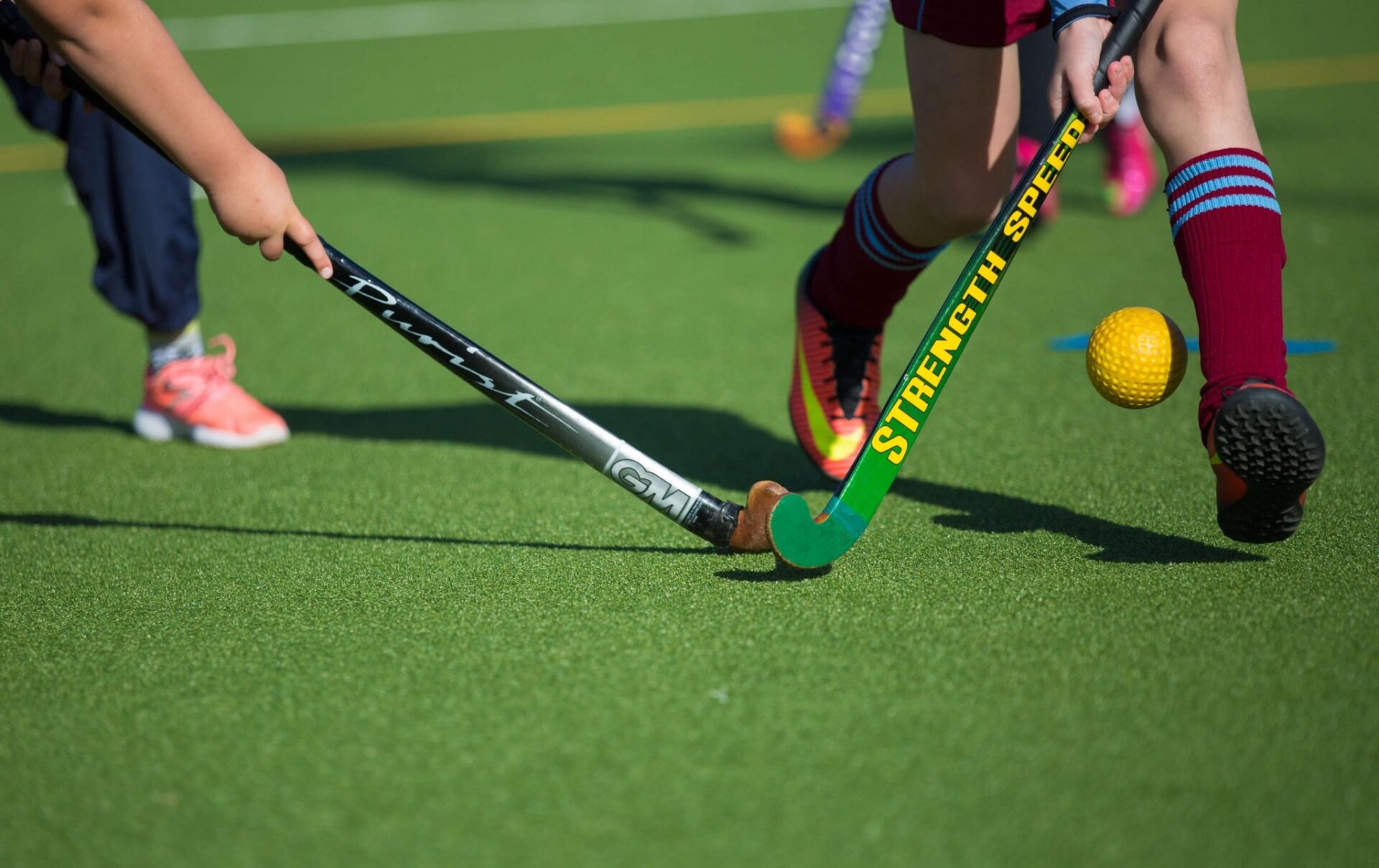
Hockey is a sports game that is gaining popularity recently. Although the Hockey Federation was founded in 2002, it has a longer history in Turkey even before the Republic. Back then, the tournaments were held in different fields while today it is played on artificial grass.
Technical Specifications of Synthetic Field Hockey Field
Perimeter Wire Fence Works and Lighting
Constructing a perimeter wire fence can be challenging. However; the steps to follow are clear. In order to surround the beam, a foundation is dug around the site. And then, molds are attached to the beam channels. 10 and 12 Q iron rods are used for stirrups. After this, perimeter is placed on the bond scale, placing 4 anchorage pipes at certain intervals. For the next step, ready-mixed concrete is poured into the iron-reinforced molds and let to dry. Vertical pipes will be welded to the anchor pipes. Horizontal pipes are reinforced with diagonal beams, after which vertical reinforcement pipes are welded to the vertical pipes.Next stem is welding the cross pipes behind the goals, building 2 hinged doors and two goal posts from 114 × 3 thick pipes on the field. And then you can paint them to any color you desire.
After the iron works are complete comes the landscape works. After the field is covered with galvanized and PVC coated wire mesh, 4m thick steel rope is stretched behind the goal and connected with terminal blocks. The area around the playground is surrounded by concrete curbs. For lighting purposes, 4 galvanized lighting poles with 1000 w projectors are erected at each corner of the field.
Infrastructure and Drainage Works
Before the hockey field is built, the ground survey is done and the ground is leveled to be compacted well. 50 x 50 size drainage channels are opened on the ground and around the field. During this process, care is taken to ensure that the channels are inclined. A sand cushion is formed by laying felt on the opened channels. Then, flex-drain drainage pipes are placed and asphalt is poured on the ground after gravel or plant mix filling. Finally, four water collection logs are made in the area. Similarly, irrigation log, water spring and water tank are set up for the irrigation system.
Artificial Grass Works
As the first step of the Artificial Grass application, Shock Pad or geotextile felt (depending on the pile height of artificial grass) is laid between the floor and the artificial grass carpet. After the joints of the carpet are glued with the seaming tape. As the last step, field lines are drawn according to the measurements.