
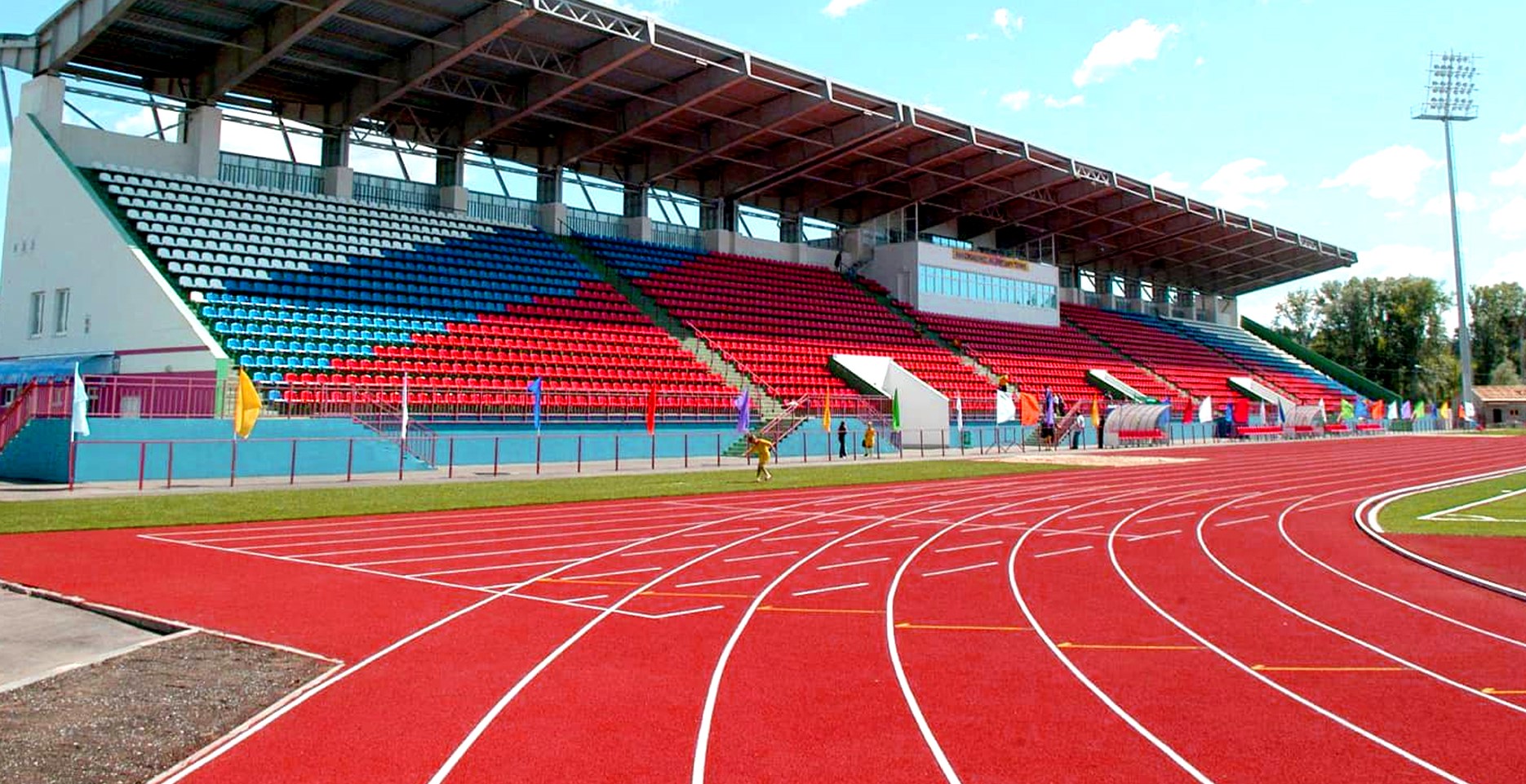
Structures designed for professional athletics tracks differ significantly from those used in parks and gardens. For international events such as the Olympics, the use of SBR and EPDM synthetic rubber is mandatory. At Reform Sports, we have successfully completed numerous projects since 1994 adhering to these standards.
How Are Athletics Tracks Planned?
The construction of a modern athletics track starts with proper planning and quality execution. At Reform Sports, we build long-lasting and environmentally friendly tracks that comply with international standards. The first step in the process is to analyze the technical and functional needs of the project.
Planning & Design
Technical project planning is carried out based on site analysis, track orientation, and sun–wind calculations. The topographical structure, bearing capacity, and existing infrastructure conditions of the area are examined in detail. The track is then oriented along a North–South axis to optimize athlete and spectator visibility and minimize wind effects. The impact of sunlight on the surface is calculated, and orientation is determined considering shading, heat differences, and light reflection.
Based on this data, technical drawings of the track are prepared, including drainage and slope calculations. At Reform Sports, we conduct this planning process with our professional team in full compliance with international standards.
- Topographical and infrastructure analysis of the project site.
- 400 m length and IAAF-compliant lane widths.
- Sun and wind direction analysis guides layout planning.
Ground Preparation and Infrastructure
Grading is one of the most critical stages to ensure the track’s flatness and durability. First, the natural slope of the land is checked and corrected if necessary. The surface is then compacted with roller compactors to ensure even load distribution. To prevent water accumulation, a peripheral slope is given and a drainage system is integrated.
Finally, a high-strength concrete or hot asphalt layer approximately 10 cm thick is applied to prepare for the top surface application. At Reform Sports, we implement all these steps professionally based on ground data and IAAF standards.
- Ground slope is corrected within a range of 0.5–0.7%.
- 10 cm asphalt or concrete layer is applied, wave tolerance kept within ±3 mm.
- Composite drainage materials are installed for effective water discharge.

Athletics track built by Reform Sports at Mersin University.
Surface Coating Material Selection
The surface coating systems we offer at Reform Sports are IAAF approved. The table below details various systems:
| System | Layer Composition | Advantage | Thickness |
|---|---|---|---|
| Full Polyurethane | 17 mm (13 mm PU + 4 mm EPDM) | UV resistant, suitable for all seasons | 17 mm |
| Sandwich System | 10 cm asphalt + SBR + PU + EPDM | IAAF certified, long-lasting | 13–14 mm coating |
| Tartan Surface | 8–10 mm SBR + 4–5 mm EPDM | Shock-absorbing, eco-friendly structure | 12–15 mm |
Surface Coating Application
Granular materials are mixed evenly with special binders and applied layer by layer. Each layer must be evenly distributed, and potential swelling during application should be prevented. Surface smoothness is achieved using hot application machines, enhancing the system’s physical durability.
Before each application, the surface must be checked to ensure high adhesion between layers. At Reform Sports, we optimize temperature and binder ratios precisely during application for maximum performance.
- After primer-polymer is applied to the base, 8–10 mm SBR granules are spread.
- The top layer is applied by mixing 4–5 mm EPDM granules with binder.
- Hot machines are used to level the surface and ensure uniformity.
Final Checks & Line Marking
- After curing, precise measurements and performance tests are conducted.
- Lines are marked using specialized machines in accordance with IAAF dimensions—no margin for error.
- The track is delivered as a turnkey project.
Explore our athletics track projects in detail.
Features of IAAF Certified Professional Tracks
Class I and II athletics tracks certified by the International Association of Athletics Federations (IAAF) can only be approved with high-quality infrastructure and surface solutions. These tracks must have a slope between 0.5% and 0.7%, ensuring optimal water drainage and athlete safety.
The surface materials used must meet IAAF standards. The use of 100% pure binders is critical for long-lasting adhesion and durability. In polyurethane systems, only first-class materials are permitted. Composite drainage systems are essential for effective water discharge.
Measurement and line marking processes must strictly adhere to IAAF tolerances. Lane widths, curve radii, and start-finish lines must be implemented with millimeter precision. For this reason, laser-assisted measuring systems are used and every phase is documented. At Reform Sports, we fully comply with all technical requirements for IAAF-certified track projects and successfully complete the certification process. As a result, our tracks are suitable for both national and international use.
Frequently Asked Questions
According to IAAF standards, the inner lane of an athletics track has a perimeter of 400 meters, measured along the inside edge.
How long is a standard athletics track?
A standard track consists of one full lap of 400 meters. Depending on the race, it can be 1 lap, 2 laps, or more.
How wide is a single lane on an athletics track?
According to IAAF regulations, each lane must be at least 1.22 meters wide. Tracks typically have 6, 8, or 9 lanes.
How long is the athletics track used in the Olympics?
Olympic tracks are also 400 meters long and typically feature 8 lanes. These tracks must hold an IAAF Class I certificate.
What is considered middle-distance running in athletics?
Middle-distance events are 800 meters and 1500 meters. These races require both endurance and speed.
What is considered sprinting in athletics?
Sprint events include 100 meters, 200 meters, and 400 meters. These races emphasize explosive power and speed.
What are the types of running events in athletics?
Athletics running events include:
- Sprints: 100 m, 200 m, 400 m
- Middle-distance: 800 m, 1500 m
- Long-distance: 3000 m, 5000 m, 10,000 m
- Hurdles: 100 m (women), 110 m (men), 400 m hurdles
- Relays: 4×100 m, 4×400 m
- Marathon: 42.195 km

