
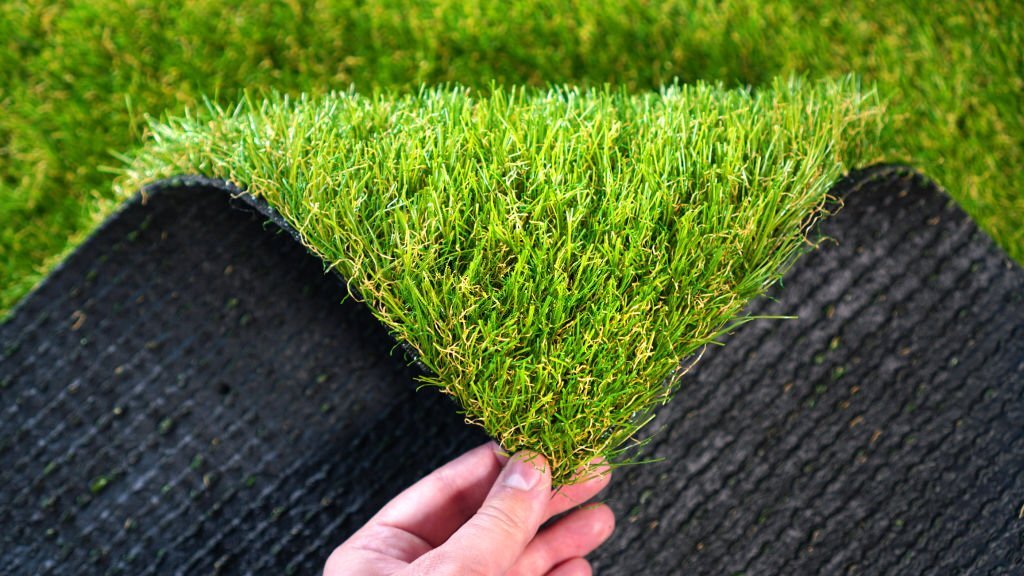
How is Synthetic Grass Application Made in Football Fields?
Many floor products can be used on the floor of the football field. Of course, the most widely used synthetic grass is artificial grass. Synthetic grass, which is no different from natural grass, prevents athletes from slipping. No problems are encountered while doing sports. With its highly elastic structure, there is no problem such as injury in a possible fall. It does not affect the performance of both amateur and professional athletes.
Although it is a chemical product, it does not harm human health. It is very simple to maintain and clean. It is not possible to encounter problems such as insects and pests in self-protecting synthetic grass. It does not need sand compared to natural grass. It varies by floor. Artificial turf is a product preferred especially in football fields. Artificial turf, which should be used especially in commercial areas, is also used in schools, gardens and other outdoor areas.
Synthetic Turf Application Steps on Football Fields
Artificial grass, which is very similar to natural grass, can be used in all places where weed does not grow and looks bad. It does not require any extra maintenance or cleaning. It is used for a long time without deformation and without losing anything from its originality. It is a product that has been used for at least 10 years. When constructing a sports field with synthetic turf ground, the size and plan of which are determined, the ground excavation is taken as the first operation and brought to the zero code. A foundation is dug on the ground of the field for the beam formwork. The perimeter beam concrete is engaged around the field with the determined dimensions. Special geotextile bundling is applied to the excavated drainage channels.
The bundling process can be defined as the complete wrapping of the building foundation with a membrane layer. Drainage pipes cut in suitable sizes are laid. Immediately after the drainage pipes are laid, the drainage pipes are connected to the main drainage part. Filter material is filled in a suitable form and amount to the drainage channels to which the drainage pipes are dug and connected.
Then the number 3 stone chips are used and compaction is done. Then, the number 1 crushed stone is poured and compacted and smoothed with the help of a roller. After this process, the undulation, that is, the fluctuations that may occur or occur, is set and prevented. A flat surface is required for the sports field with a synthetic grass surface. For this reason, sufficient compression is done so that the ground takes its flattest shape. The first step after having a flat floor is to lay felt on the floor.
The other process after the felt is laid is the laying of synthetic grass. The spread synthetic grass, the helmetin cloth glued to the joints of the carpet, are placed and glued. The adhesive used here is double component polyurethane. Football field lines can be made in the color of your choice, but are usually yellow and white. The field lines are placed in a sport-appropriate manner. One of the last processes is the pouring of sils sand. With the pouring of sils sand, the brushing process is carried out with the help of the brushing machine. The field becomes suitable for sports.
What are the Football Field Ground Types?
Different floors are used in football fields as in other fields. The most preferred of these fields is artificial turf. Still, the other preferred floors are 5 and these floors are as follows and these floors can be easily used in sports fields and fields.
- Artificial ( Synthetic ) Grass
- Cushion Acrylic Flooring
- Tartan Top Acrylic Flooring
- Tartan Top EPDM Sports Floors
All these types of floors of Refrom Spor are used by both amateur and professional athletes.
Acrylic Floor Covering Types
Acrylic floor covering, which is prepared with a special mixture for small and large spaces, has an extremely striking and aesthetic appearance. Currently, it is generally used in indoor soccer fields. It is non-slip. It is hygienic as it cleans itself. No particular maintenance is required.
It is used for outdoor football fields because it is not affected by weather conditions and environmental factors such as rain, snow and wind. Such elements do not damage the acrylic flooring and are used very comfortably on open football fields.
Cushion Acrylic Flooring
You can think of it like a polish on top of acrylic flooring. It is preferred not only in football fields, but also in many areas such as tennis courts, basketball courts, volleyball courts, handball fields, multi-purpose sports fields, skating roller tracks, athletics tracks.
Tartan Top Acrylic Flooring
It is a type of floor used in all multi-purpose fields. This ground, which can be played in football, is usually for the tennis court. It is one of the most frequently and intensively preferred and used floor types. It comes to the forefront with its alternatives such as the controlled movement of the ball in the field and the ability to absorb pressure such as jumping.
Tartan Top EPDM Coating
It is a ground used in almost every sport. If we need to give an example from a few sports branches, tennis, football, athletics tracks in open and closed fields are examples of these. There is no possible problem in the application of edpm coating on tartan, which can always be easily found in all kinds, up to 15 mm thickness. Structurally, it consists of 2 layers. This makes it quite advanced. The bottom layer of the floor is 8 mm thick. With the granule, the top layer is 7 mm thick.