Innovative Hybrid Turf Systems
Natural grass grows by up to one centimeter every year due to the accumulation of dead leaves between the plants. This means that the plastic fibers have too little fiber overhang. To ensure a reliably functioning system, this part should be removed annually. For this purpose, the superficial felt is removed from the system with a Koro Fieldtopmaker and a special shaft. These special knives ensure that the plastic fibers are not damaged during this work.
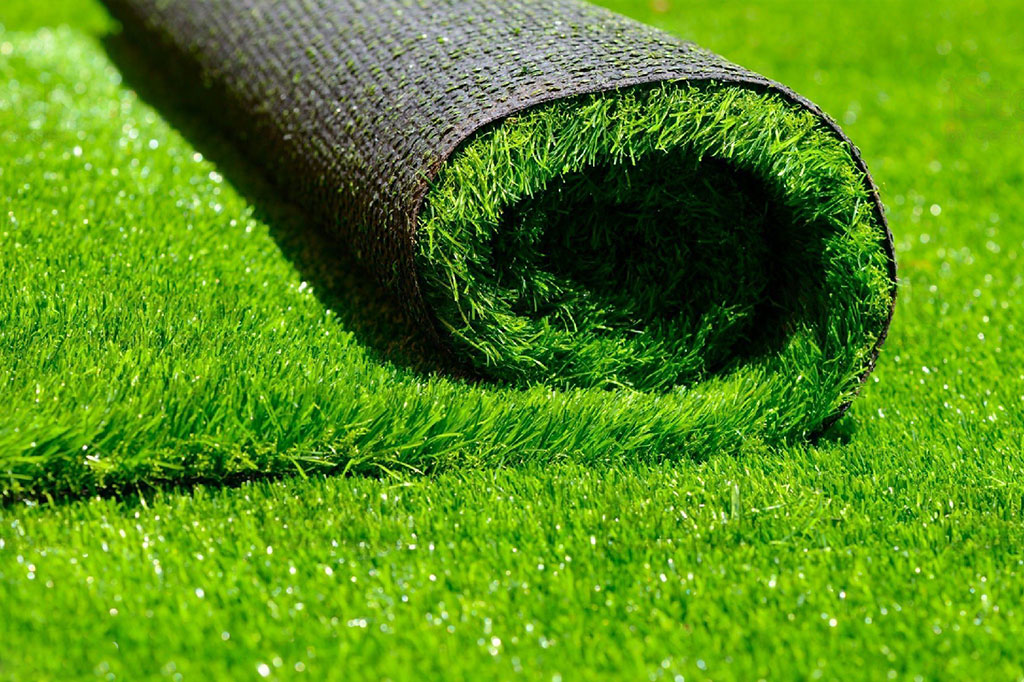
Hybrid turf systems are sensitive high-tech products that function optimally when all factors are set appropriately. To ensure this, hybrid turf systems must undergo an annual renovation. Depending on the requirements, sand or a turf-bearing layer is then applied in sufficient thickness and levelled. Finally, the pitch is seeded and can be played on again after about eight weeks. We as Reform Spor carry out all maintenance measures tailored to the actual conditions in order to maximize the lifespan of the hybrid turf system. The artificial turf is delivered to the construction site in strips four meters wide and around 70 meters long. The three so-called base lines – the two outer goal lines and the middle line – are already tufted into the lanes.
At the beginning, the track is rolled out with the outer goal line. The line is then aligned with the two corner flag sleeves and the goal sleeves. Once the first panel is aligned, the green panels are then laid out up to the center line. In order to connect the tracks to each other, they are glued. To do this, the first step is to cut off the conveyor belts required in production, if they are available. They are glued together, there is no connection with the elastic layer so that the artificial turf can move when the temperature changes. A so-called seam tape is used for bonding, to which the adhesive is applied. The respective artificial turf strips are then pressed into the adhesive and fixed in place with continuous rolling. Once the entire surface has been glued together, the playing field lines are inserted. To do this, the green covering is removed and replaced by the respective line color. You can choose between the colors white (most common), blue (usually for youth lines) and yellow (rarely used today).
Costs of Hybrid Turf Field Construction
When building artificial turf pitches, the construction costs are often compared in advance with the costs involved in building a natural turf pitch. The maintenance costs must always be taken into account in this comparative calculation. Compared to natural turf, artificial turf can be played on all year round and has a significantly longer service life. The investment costs for the construction of artificial turf pitches are significantly higher, but clubs can expect low maintenance costs for artificial turf compared to natural turf. An artificial turf pitch has a lifespan of 12 to 15 years and should be replaced after this time and replaced with a new surface. The costs for recycling the artificial turf should be integrated into the cost calculation from the start. The risk of injury when playing soccer on artificial turf has been steadily minimized in recent years and today’s systems can be used without hesitation without harming the health of the athletes.
When choosing the artificial turf granules, clubs should rely on granules that have been specially developed for artificial turf pitches. SBR recyclate in particular is viewed increasingly critically when it comes to infilling an artificial turf pitch. Although EPDM granules, TPE or filling with cork are more expensive, they are also tailored to the artificial turf system. Artificial turf pitches can be played on between 2,000 and 2,400 hours per year with appropriate care. A sports field with natural grass has a service life of approx. 1,000 hours per year. Artificial turf pitches have the advantage that they can be used and played on in all weather conditions. For clubs with short periods of use, investing in an artificial turf field should be reconsidered if this is the decisive reason for a new building.
Advantages of an artificial grass pitch
- Longer service life compared to a natural grass pitch
- Consistent playability even in bad weather conditions (rain, snow, etc.)
- Less maintenance intensive compared to a natural grass pitch
- Higher intensity of use – several teams can use the artificial turf
Say goodbye to gardening and say hello to your bright, green lawn. Artificial turf makes it possible: Although it hardly differs from natural turf in appearance, artificial turf does not require water, mowing or fertilization. Thanks to the water and electricity savings, the environment can also be protected. Our artificial grass looks almost indistinguishable from real grass, but you will never again suffer from a muddy lawn with yellow or bare patches. The grass always stays nice and green, dries out quickly after it has rained and therefore never becomes swampy. For this reason, an artificial turf sports field in the garden can be used all year round and in all weathers.
To complete the playing field, we at Reform Spor can immediately apply the right lines for you. For this we use white artificial turf, which we integrate into the playing field according to a careful laying plan. Choose the right lines for a football or hockey field or have lines made for a multifunctional sports field. It is even possible to color the playing field in different colors. For larger sports fields we can use a cutting effect in the lawn.