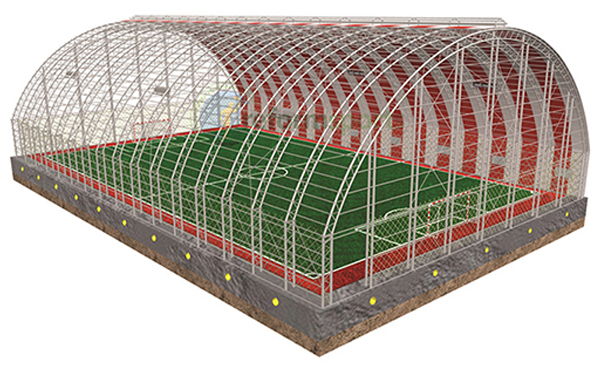
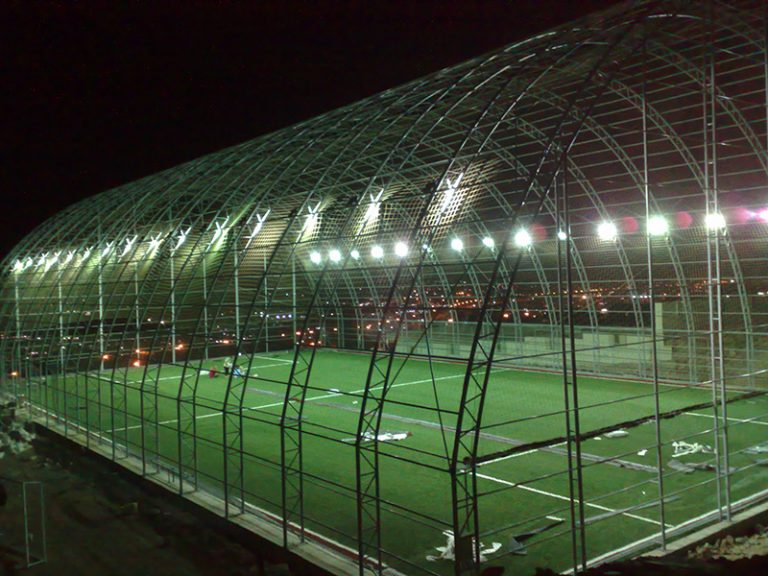
The indoor football pitches , known as the closed pitch , is built by closing the pitch and sides of the pitch with the construction system in accordance with the static calculations . The construction is covered with tarpaulin or corrugated material made of glass fibre material. Field sides can be opened and closed if desired. For indoor field construction, third and fourth floor synthetic turf s are used.
Reform Sports’ expert and experienced team realizes the Indoor Football Pitch as a turnkey project within 6-8 weeks and presents it to you.
We produce turf artificial turf in our 12.500 m² factory in Çorlu, Tekirdağ. Annual production capacity of artificial turf is 13.000.000 m². The latest technology production techniques and high quality European yarns are used.
For indoor field construction, our artificial turf models can be produced in different colors as 40mm, 50mm, 55mm and 60mm. Generally, 55mm artificial turf s are preferred in field construction. Our artificial turf models made of monofilament and fibrile yarn can be produced in single and double colors.

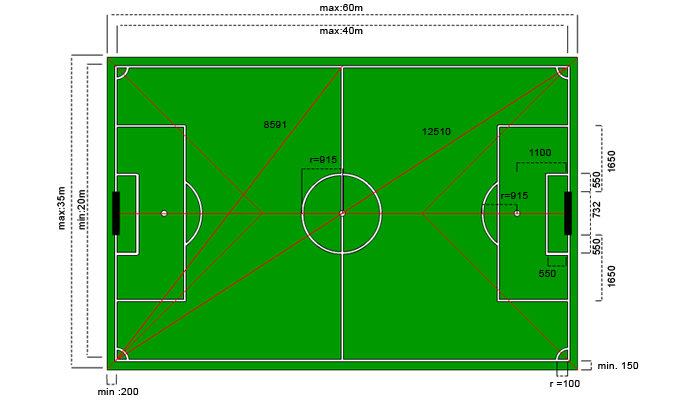
The most suitable pitches are considered to be approximately 30m * 50m. Larger pitches are not suitable for commercial use and for amateur football fans.

The cost of construction of the Indoor Football Pitch varies primarily according to the type of the Indoor Football Pitch. Tarpaulin, sheet or pvc coating material used in the construction of covered fields shows price differences. The most important price difference in indoor field construction is due to its size.
Indoor pitches for commercial purposes can be made from 20mx40m up to 30mx50m. The most preferred indoor area that allows 7 × 7 people to play ball easily is 30mx50m. 20mx40m is usually small in commercial indoor pitches, but 25mx45m indoor pitch can be preferred in price performance.
What are the factors that affect the cost of pitch?
Field construction, field construction cost, field artificial turf prices, indoor field installation, synthetic turf, monofilament pitch turf, fibril synthetic turf to get support and price issues, please contact us to learn.
Open football fields are exposed to weather conditions, making them less suitable for year-round use. In contrast, indoor football fields provide protection from rain, wind, and extreme temperatures, ensuring consistent play conditions. Additionally, indoor fields generally require artificial lighting and ventilation systems.
The main cost factors include the size of the field, the type of roofing and structural materials, and the quality of artificial turf. Other elements like lighting, ventilation, and additional facilities such as spectator stands or locker rooms also impact the overall budget. Local regulations and labor costs can further influence pricing.
The construction timeline depends on factors such as size, materials, and weather conditions. On average, it takes 8 to 12 weeks to complete a standard indoor football field. However, delays may occur due to permit approvals, material availability, or unexpected site conditions.
Artificial turf is the most durable option for indoor football fields, as it requires minimal maintenance and withstands heavy use. High-quality synthetic grass with proper infill provides excellent shock absorption and reduces injury risks. While natural grass offers a better playing experience, it requires significant upkeep and is not ideal for indoor settings.
Indoor football fields require LED floodlights for uniform brightness and energy efficiency. The lighting system should provide a minimum of 200-500 lux for amateur play and over 700 lux for professional matches. Proper placement of lights helps reduce shadows and glare, improving visibility for players and spectators.
For ventilation, a well-designed air circulation system is essential to prevent humidity buildup, control temperature, and ensure fresh air flow. Mechanical ventilation, air conditioning, or exhaust fans can help maintain optimal air quality. Large facilities may also incorporate HVAC systems for climate control, ensuring player comfort throughout the year.
Regulations vary by location, but typical requirements include construction permits, zoning approvals, and safety certifications. Fire safety and emergency exit regulations must be met to ensure compliance with local laws. Additionally, if the facility operates commercially, business licenses and insurance may be required.
To meet FIFA and TFF standards, the field dimensions, surface quality, and goalpost specifications must align with official regulations.
The artificial turf should be FIFA Quality or FIFA Quality Pro certified, ensuring safety and performance. Proper drainage, lighting intensity, and boundary markings must also adhere to standard guidelines for professional play.
You can examine our products that you can use in Indoor Football Pitch Construction


Contact Us